11.60 Scatter Plot
20220111
set.seed(26439)
ds %>%
  sample_n(1000) %>%
  ggplot(aes(x=min_temp, y=max_temp)) +
  geom_point() +
  labs(x=vnames["min_temp"],
       y=vnames["max_temp"])
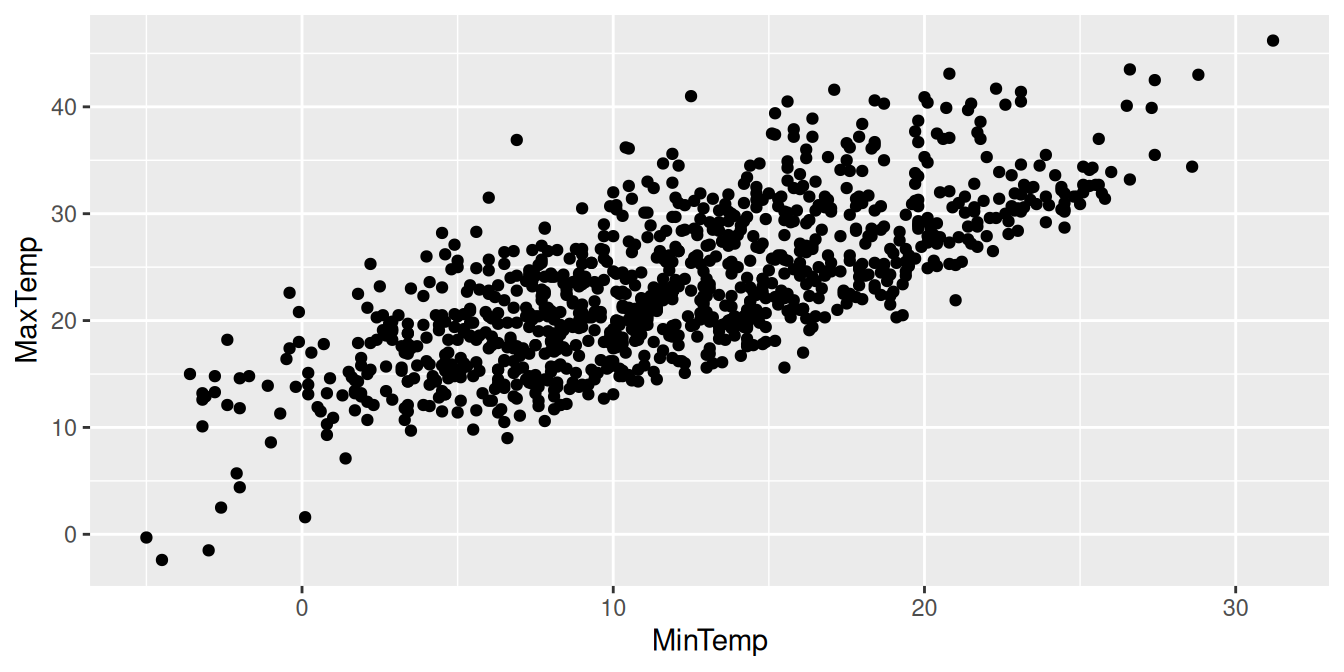
The simplest of plots is a scatter plot which displays a two dimensional plot of points. The
dimensions, specified through the aesthetics function
ggplot2::aes(), are the x= and y= axes. The observations from
the dataset, the rows, are plotted, scattering the points over the
plot. Even with a simple plot we can observe a generally linear
relationship between the two variables. That is, higher values of
minimum temperature are loosely correlated with higher values of
maximum temperature.
Scattering too many points (thousands or more) over a plot can result in a loss of information as the plot ends up mostly black with points overlaying other points. Some solutions are presented in this chapter to this problem, but for illustration here we randomly choose just 1,000 points. A random number seed is fixed using base::set.seed() so that each time we do the random sample we get the same random sample, again for illustration.
The template dataset variable ds (having 275,410
observations/rows) is sampled using dplyr::sample_n(). This
subset of 1,000 observations is piped (%>%) into
ggplot2::ggplot(). The aesthetics ggplot2::aes() are set up
with min_temp as the x= axis and max_temp as the y= axis. The
points (observations) are added to the plot using
ggplot2::geom_point().
For presentation the x and y axis are labelled with the original names of the variables, using ggplot2::labs().
If you find this curated material useful then you can consider a donation to support it's ongoing availability and give you access to the PDF version of this book. The material has been scoped up by Generative AI without permission or any kind of recompense so do consider a donation if you can afford it. Unlike Generative AI your access to this materials is freely given. Desktop Survival Guides include Data Science, GNU/Linux, and MLHub. Books available on Amazon include Data Mining with Rattle and Essentials of Data Science. Togaware has a 30 year tradition of making popular open source software which includes sold privacy preserving productivity apps, rattle, wajig, and mlhub. Hosted by Togaware, a pioneer of free and open source software since 1984. Copyright © 1995-2022 Graham.Williams@togaware.com Creative Commons Attribution-ShareAlike 4.0